About and CV
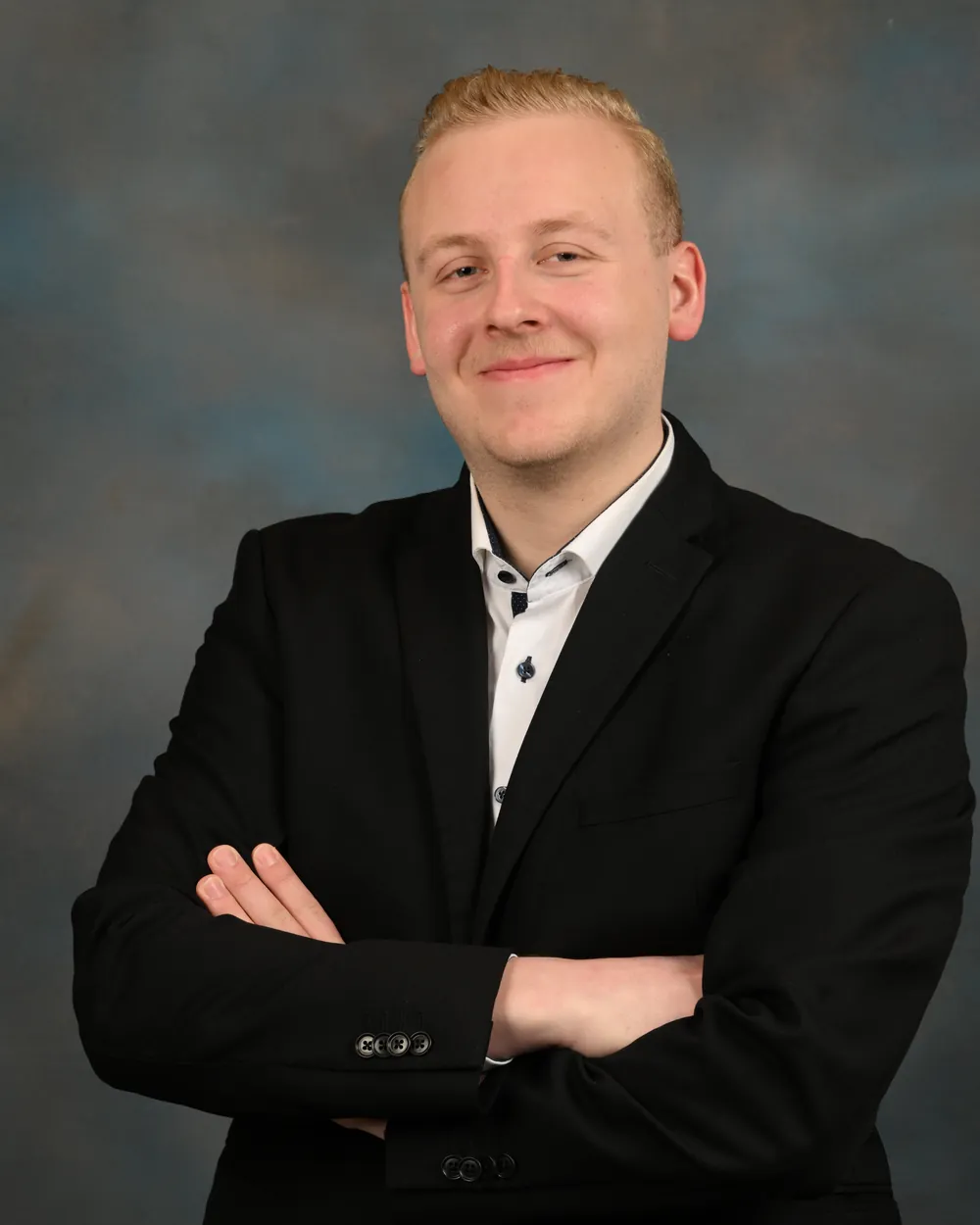
I am a French engineer finishing a dual degree between Arts et Métiers (ENSAM) and ÉTS Montréal. I like working with data in every way, exploring it, understanding what it says and drawing it. My master’s thesis, defended on 26 June 2026 and rated Excellent, followed the snow cover of 22,155 glaciers from satellite images. I also build monitoring systems, from field data loggers to web dashboards, and I make art from the data I work with.
What I am looking for
My goal is a PhD starting in February 2027, in the continuity of my studies and my path. Until a position comes up, I will work as an engineer. In both cases I want to work with data, fieldwork, modelling or instrumentation, on environmental questions with real science behind them, and on things that scale in data volume, in space and in time. Open to relocation in Canada and Europe.
French citizen (EU). Canadian post-graduation work permit valid until 2029.
CV
Two versions for two readers, each in English and French.
PhD CV
Research profile, publications, conferences, open-source software and references.
Experience
Sept to Nov 2026
Geospatial analyst intern
- Developing a Python workflow that models wildlife habitat in British Columbia on a 10 m grid, from terrain, land-cover, forest, disturbance, snow and hydrology layers to annual habitat-area trends for each management unit (Theil-Sen, Mann-Kendall), with a viewer and GeoTIFF and CSV export. Confidential development for the company.
- Adapted my open-source land-cover pipeline, built in my own time and extended during the internship, to feed the workflow. Its U-Net uses FiLM conditioning on sensor and day of year (21 input channels, 10 m grid, Landsat 5/7/8/9 and Sentinel-2) and was trained on 705 hand-annotated scenes with splits by tile. Test mIoU is 0.604 and kappa 0.749 on unseen tiles.
- Ran the pipeline over 42 years of imagery with CCDC-style break detection, which dates disturbances such as fires and cutblocks. The model weights are on Hugging Face under the MIT licence.
May to Aug 2026
Developer
- Rebuilt the BVECSM weather-station platform end to end, from the data loggers to the website. Old and new data are merged into one history with versions, back to December 2015.
- Built the website on FastAPI (about 60 pages) with dashboards, historical comparison, manual correction with an audit trail, sensor status, field-camera images, downloads in CSV, Excel and Parquet, and user profiles. It covers eight stations and about 7 million records, from 1-minute to daily series.
- Built a hydrological modelling pipeline with GR4J, GR4J-CemaNeige, MOHYSE, a differentiable GR4J in PyTorch, an LSTM and an EA-LSTM, run daily on two stream stations, next to 15 environmental models (snow, energy balance, evapotranspiration, groundwater, river temperature).
- Automated the system end to end, with logger files read every 30 seconds and syncs every 5 to 15 minutes. Researchers, ÉTS courses, the municipality and local farmers use it.
- Field work at the stations, with equipment installation and sampling.
Sept 2024 to June 2026
Graduate researcher, remote sensing and deep learning
- Developed a U-Net segmentation pipeline (snow, ice, cloud, other) for five sensors (Landsat 5/7/8/9 and Sentinel-2), trained on a self-annotated corpus of 206 glaciers and 540 scenes. Test mIoU is 0.705 with a split by glacier.
- Measured the leakage of a split by scene, where 35.9% of glaciers were on both sides of the split. In that run, scenes of glaciers seen in training score a per-scene mIoU of 0.696, against 0.575 for glaciers never seen.
- Reconstructed the end-of-summer snow fraction of 22,155 glaciers from 1984 to 2025, which gives 786,014 glacier-year observations.
- Used the record in a second manuscript, under review, on how individual glaciers respond over four decades.
- Extended the pipeline to tributary glaciers (Kluane) and to water, vegetation, rock and debris classes (Peyto, Wapta). It now supports a doctoral colleague’s thesis chapter and two supervisor-led projects.
- Field support for colleagues, with sampling for urban green-infrastructure studies and equipment installation at the Sainte-Marthe weather stations.
Education
2024–2026
MSc in construction engineering (thesis)
Article-based thesis defended on 26 June 2026, rated Excellent. Supervised by Michel Baraër (ÉTS) and Caroline Aubry-Wake (University of Lethbridge).
2022–2026
Engineering degree (M.Eng. equivalent)
Diploma expected early 2027. Generalist programme in a dual degree with ÉTS, covering electrical engineering and automation, energy, mechanics and solid mechanics, fluid mechanics, materials and composites, system design, robotics, computer science, and manufacturing processes (casting, forging, woodworking).
2020–2022
Preparatory classes (CPGE)
Skills
- Machine learning
- PyTorch (U-Net with attention and FiLM conditioning, LSTM, GPU training), SegFormer, DeepLabv3+, Random forest, CatBoost, LightGBM, SHAP, Optuna, scikit-learn
- Earth observation and geospatial
- Landsat, Sentinel-2, Google Earth Engine, ArcGIS (including ArcGIS Hydro), QGIS, Zarr, rasterio, LiDAR and DEM processing
- Data and statistics
- Python (pandas, NumPy, numba, Parquet, DuckDB, Polars), Julia, MATLAB, JavaScript, SQL, Survival analysis, Theil-Sen and Mann-Kendall trends, Break detection (CCDC/COLD-style)
- Hydrology
- GR4J, MOHYSE, Differentiable and LSTM-based rainfall–runoff models, HEC-HMS, MODFLOW (groundwater)
- Instrumentation and software
- Campbell Scientific data loggers (CRBasic, LoggerNet), FastAPI, Streamlit, Git and GitHub, LaTeX, Hugging Face, conda, VS Code
- Engineering and simulation
- SolidWorks, Abaqus (finite element simulation), 3DEXPERIENCE, Electrical energy systems, Physical modelling, Blender, Canva
Languages
- FrenchNative
- EnglishDaily professional use, TOEIC 845/990 (2023)
Outside work
Hiking and nature walks, swimming, cooperative board games. I am getting back into photography, and I make data art from my own scientific data.
Outreach and memberships
- Water-cycle workshop (rain, runoff, infiltration) for Sainte-Marthe day camps2 July 2026
- With a colleague, data, LiDAR scans and custom tools for an artist in residence at ÉTS who explores climate change through art2026
- Member, Canadian Geophysical Union2026
Get in touch
For a PhD supervision, a research collaboration or an engineering role, write to me by email. I reply in English or French.